
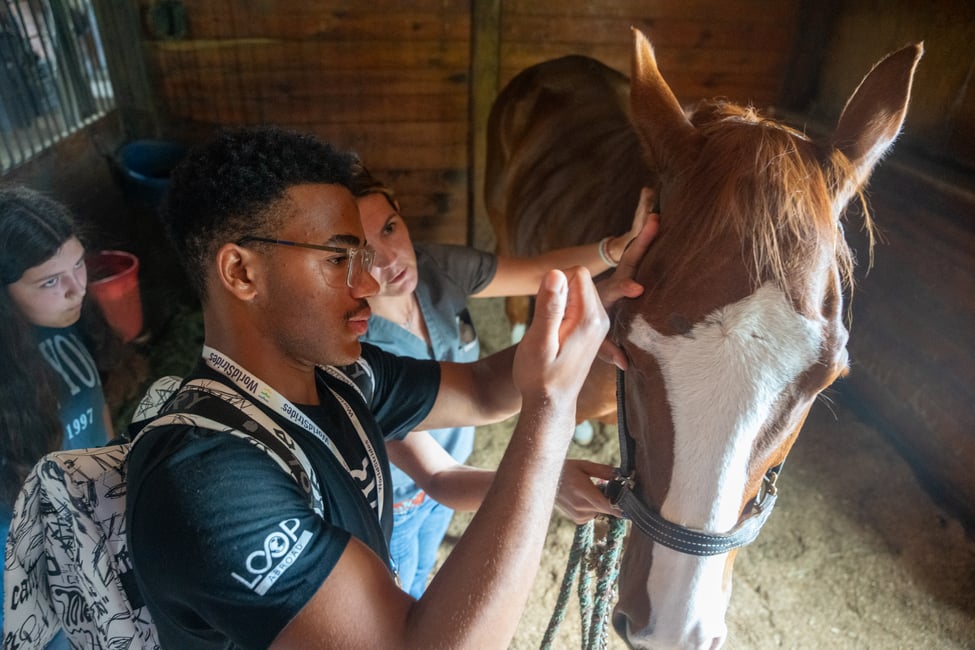


- Feel the energy as you navigate through registration lines, begin to form connections with peers, and let your anxiety for the week fade away.
Envision by WorldStrides
Veterinary Academy: Horse & Large Animal Medicine - New York
Love horses and want to be a vet? Get hands-on equine veterinary experience at Pine Bush Equine Services and local horse rescues.
Confirm Invite
Enroll NowLet's connect
You're one step closer to an unforgettable experience. Tell us a bit about yourself and we'll get you the latest program info and connect you with our admissions team for personalized support. Ready to get started?
All fields marked with an * are required.
Close
Congrats!
You've been invited!
Please fill out the form to confirm receipt of your invitation and receive additional program information.

Your Horse Dreams Meet Real Vet Training in Upstate New York
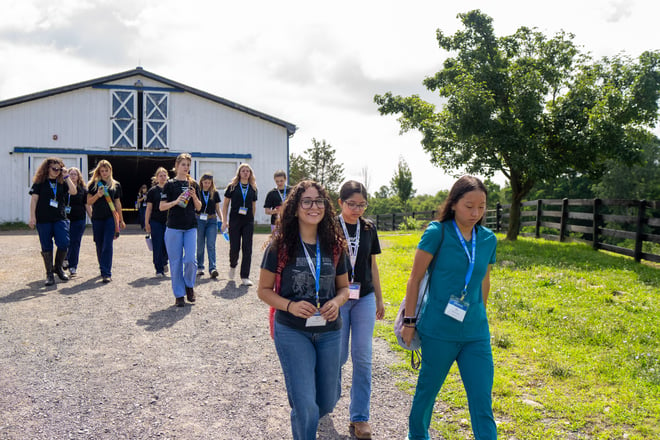
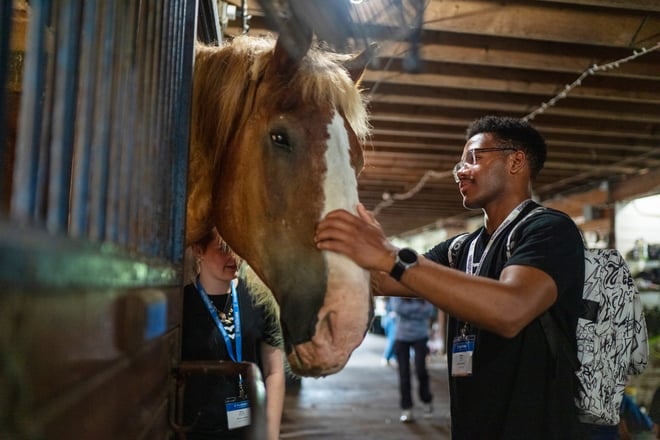
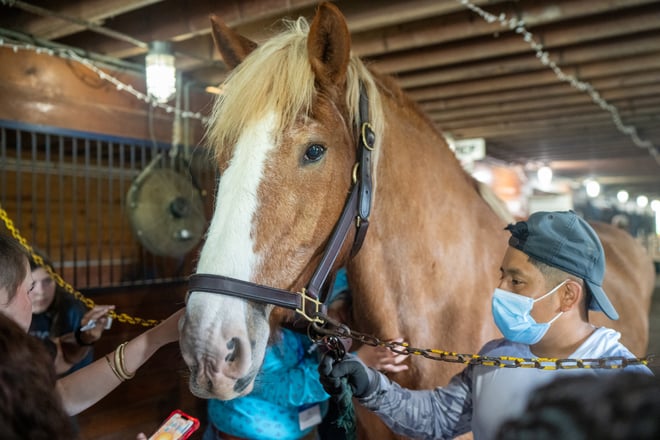
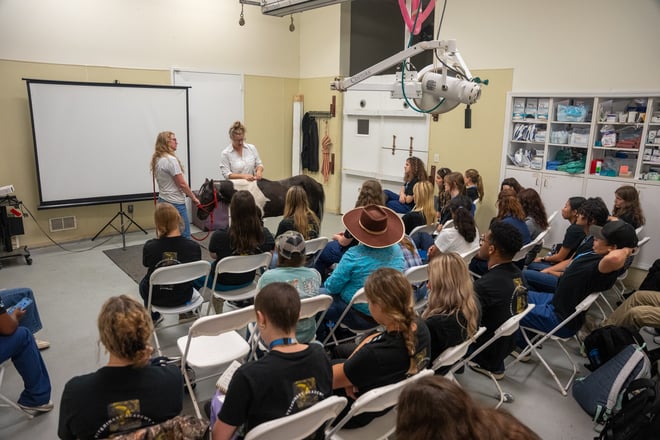
Picture yourself doing a physical exam on a rescued horse, learning proper restraint while the vet explains signs of recovery, or watching a gastroscopy demonstration to understand advanced diagnostic procedures. At the Veterinary Academy: Horse & Large Animal Medicine, you'll work at Pine Bush Equine Services & Veterinary Hospital and several equine rescue facilities.
You'll master critical skills like physical exams, wound bandaging, radiograph interpretation, and surgical prep under experienced equine veterinarians. Every day brings new challenges as you rotate through different aspects of horse medicine, from routine wellness exams to complex rehabilitation cases and breeding facility management.
Whether you're drawn to equine medicine, large animal practice, or reproductive veterinary services, this program gives you comprehensive horse veterinary exposure while earning substantial hours that strengthen your vet school application and show your commitment to large animal care.
Grades:
9-12Duration:
7 daysCollege Credit Hours:
1 College CreditsVeterinary Hours:
40 HoursFormat:
ResidentialStarting Price:
$4,999.00Locations, program content, and speakers are subject to change.
Envision by WorldStrides
For over 40 years, Envision—part of the WorldStrides family—has helped students from elementary through high school explore their interests and uncover what excites them most. Our immersive programs are built with educators and industry experts to support career exploration, leadership growth, and college prep. Along the way, students build real-world skills, boost their confidence, and start to see a clearer path toward their future.
Why This Program Changes Everything
Help Real Rescued Horses
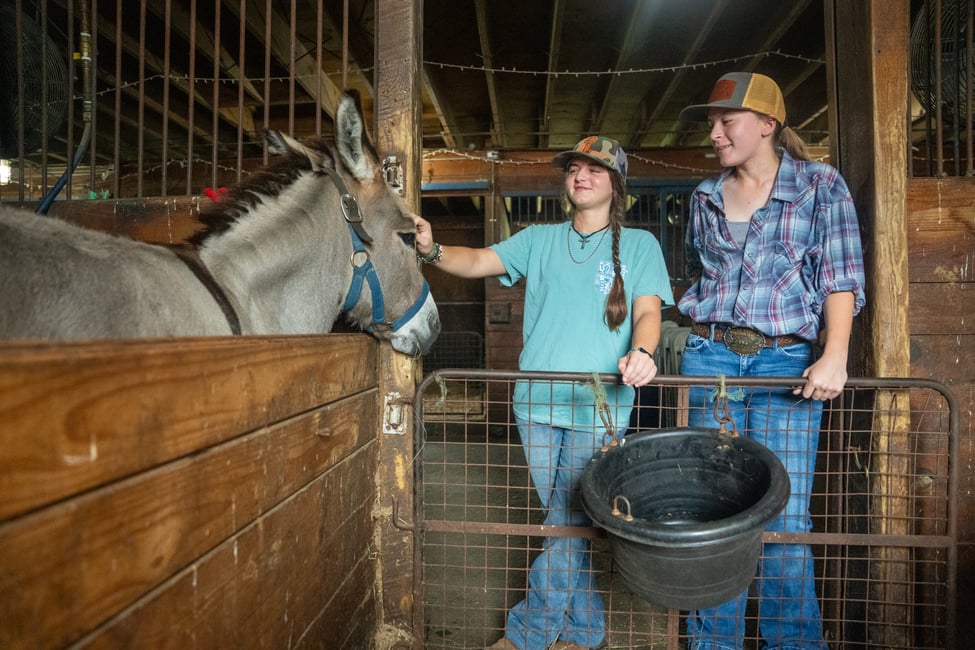
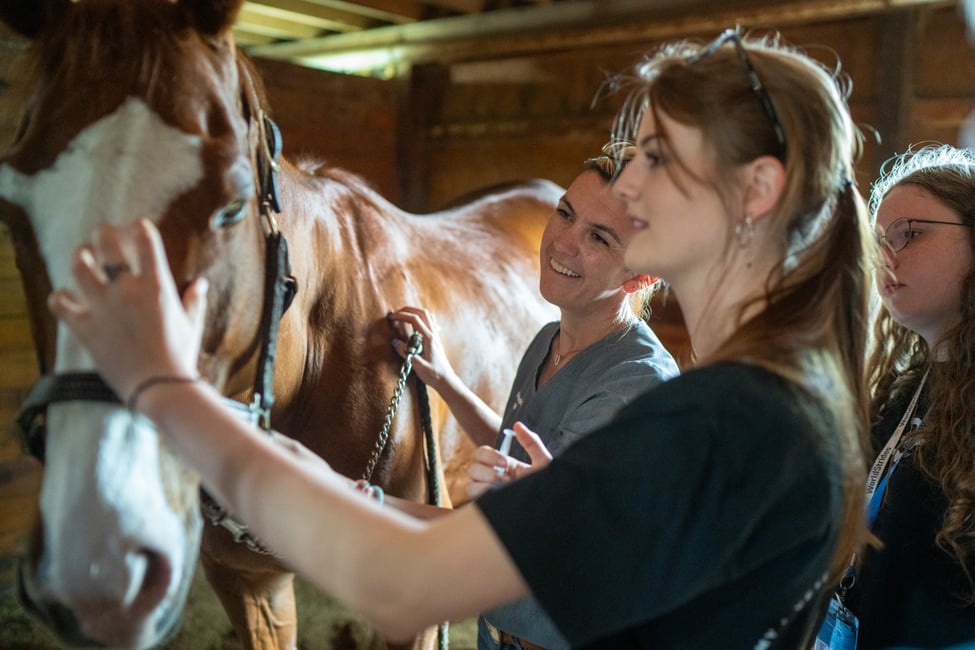
Work at equine rescue facilities doing hands-on physical exams, bandaging, and identifying health issues on rescued horses, donkeys, cows, goats, sheep, and chickens.
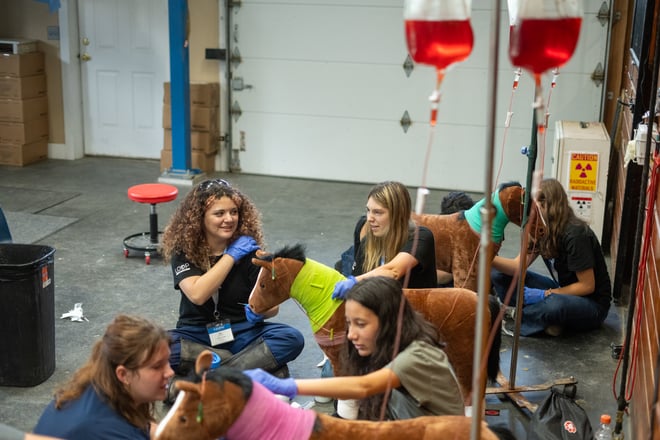
Master the Lab Skills Vets Use
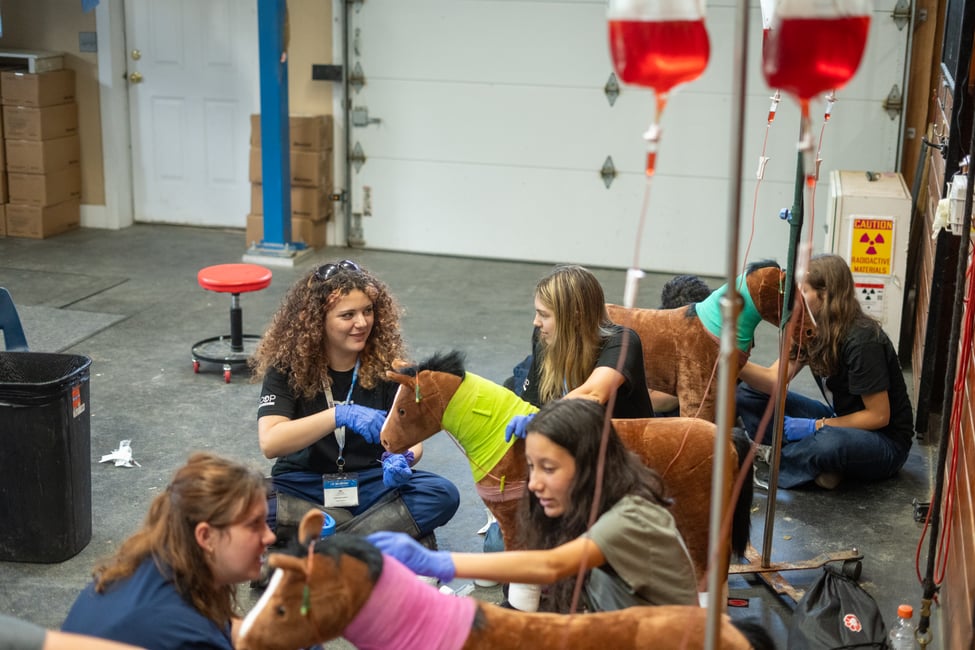
Get hands-on with parasitology, catheter placement, blood work, suturing, X-ray reading, ultrasound, wound care, and anesthesia prep.
.JPG?h=660&iar=0&w=660)
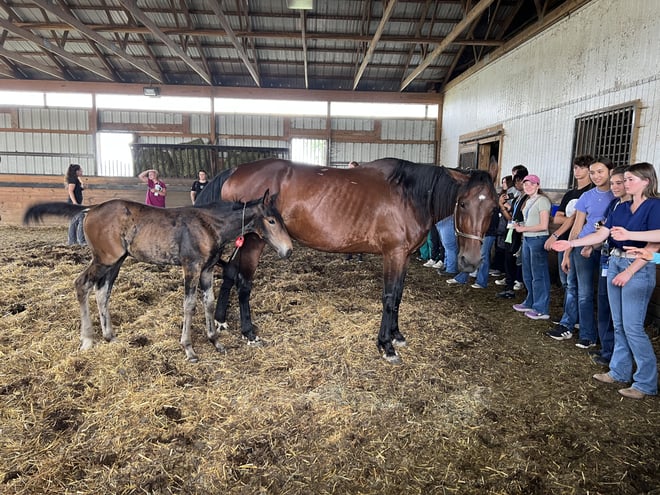
Go Behind the Scenes at a Horse Breeding Farm
Visit a working horse breeding facility to learn reproductive and neonatal health principles, preventative care techniques, and the importance of biosecurity and parasite control in equine populations.
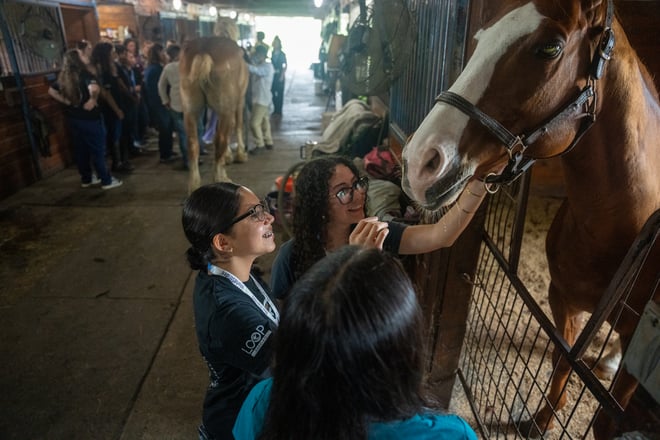
Live the College Life
Stay on the SUNY New Paltz campus with daily transfers to Pine Bush Equine Services, experiencing college life while building practical vet skills.
Built for Your Veterinary School Success
Rack Up 40 Vet Hours
Earn up to 40 vet hours toward vet school requirements with specialized large animal experience that makes your application stand out.
Check Off a Major Vet School Requirement
Focus on large animal medicine, one of the six key categories vet schools require, addressing a critical admission requirement.
Learn Horse Medicine Inside and Out
Dive deep into equine medicine including reproductive health, breeding operations, and rehabilitation techniques.
Small Group Professional Mentorship
With max 30 students and 10:1 student-to-vet ratio, you'll get personalized attention and direct mentorship from equine specialists.
Dates, Locations, & Tuition
Featured Extras
Tuition & Travel Protection
Optional protection plan providing comprehensive coverage including trip cancellation, medical evacuation, baggage protection, and accident insurance with assistance services.
Full Refund Program
For an additional fee, WorldStrides offers protection for your investment through the Full Refund Program (FRP). Should you need to cancel your trip for any reason after the 24-hour grace period from registration, or in the event that your program is cancelled as a result of Uncontrollable Circumstances (as defined below), the FRP protects your investment by reimbursing you for 100% of the amounts you’ve paid in, minus the FRP enrollment fee, any other Non-Refundable Fees.
Sample Itinerary
* Exact itinerary will vary by session and location. Participants should reference the itinerary provided as part of their enrollment package
Day 1
- Connect with your WorldStrides team and Loop Abroad veterinarians as you kick off the week with welcome activities and orientation.
Day 2 – Pine Bush Veterinary Hospital
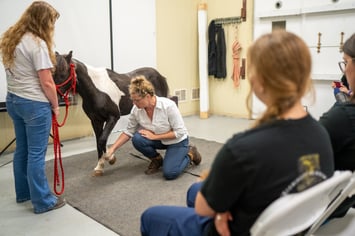
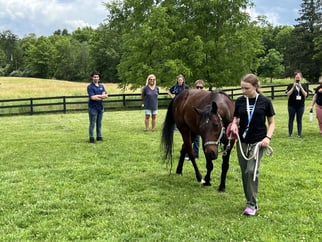
- Meet the Pine Bush Veterinary Hospital staff and receive a brief tour of the rooms and buildings where you’ll be working throughout the week.
Behavior and Handling Lab
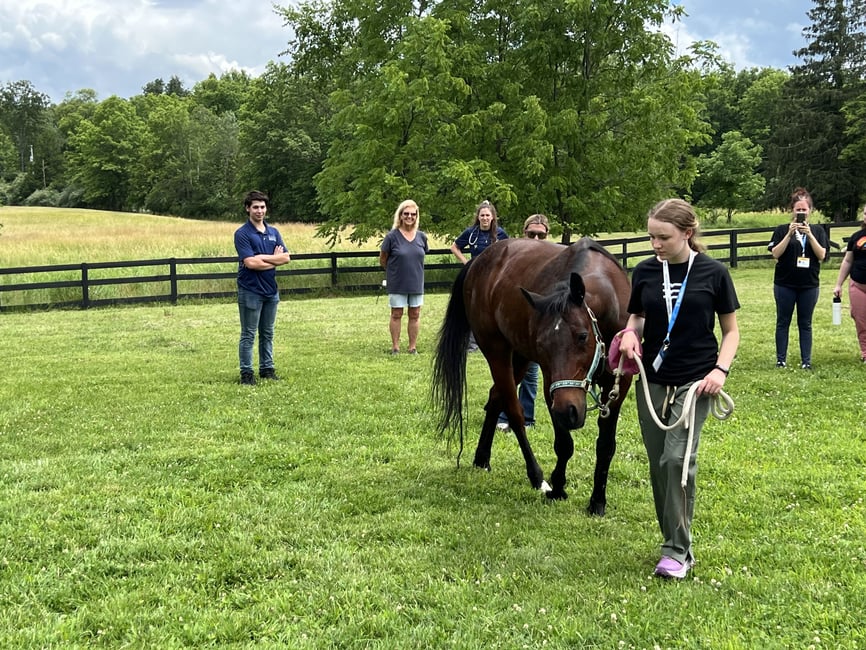
- Learn proper techniques for handling horses and dive into understanding equine behavior.
Anatomy and Directional Terminology
- Gain foundational knowledge of horse anatomy and key terms essential for future learning.
- Rotate husbandry activities such as grooming, basic care and monitoring health.
Anesthesia Lab
- Explore the critical role of anesthesia in equine surgery. They’ll learn about different types of anesthetics used in horses, how to calculate dosages, monitor vital signs, and understand the stages of anesthesia.
Diagnostic Lab
- Gain hands-on experience using diagnostic tools commonly found in equine veterinary practice. Students will practice taking vital signs, interpreting basic diagnostic results, and understanding how these tools help in identifying and treating equine health issues.
Day 3 – Pine Bush Veterinary Hospital
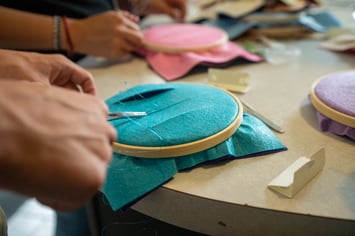
Physical Exam Lab
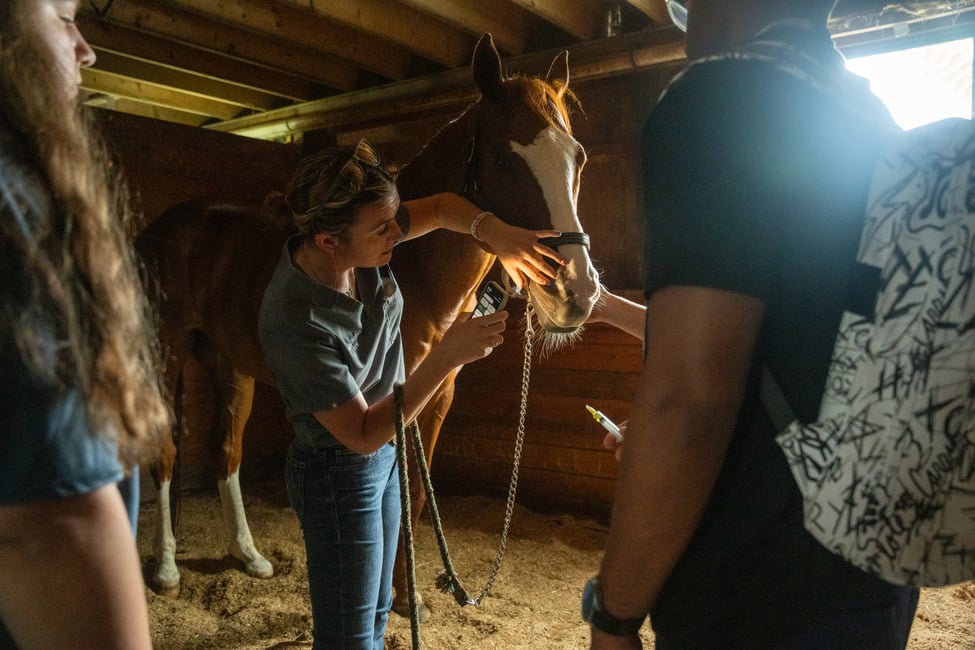
- Learn how to perform physical exams such as temperature, pulse and respiration as well as evaluating hydration status and gut sounds. These will be performed on horses and other animals
Surgical Shadowing
- Observe equine surgical procedures performed by one of the top equine surgeons in the area.
Case Studies
- Work through real equine medical cases to develop critical thinking and diagnostic skills.
- Rotate husbandry activities such as grooming, basic care and monitoring health.
Anesthesia Lab
- Explore the critical role of anesthesia in equine surgery. They’ll learn about different types of anesthetics used in horses, how to calculate dosages, monitor vital signs, and understand the stages of anesthesia.
Diagnostic Lab
- Gain hands-on experience using diagnostic tools commonly found in equine veterinary practice. Students will practice taking vital signs, interpreting basic diagnostic results, and understanding how these tools help in identifying and treating equine health issues.
Day 4 – Pine Bush Veterinary Hospital
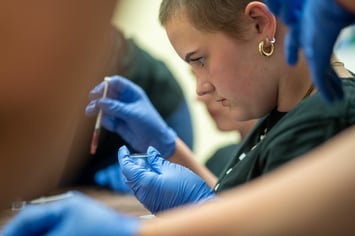
Patient Case Studies and Common Aliments of horses
- Review real or simulated equine patient cases to build diagnostic and problem-solving skills. These sessions will cover common equine ailments such as colic, lameness, respiratory issues, and skin conditions
Injections and Sample Collections Lab
- Learn proper techniques for administering injections and collecting samples.
- Rotate husbandry activities such as grooming, basic care and monitoring health.
Parasitology and Fecal Exams
- Explore common internal parasites that affect horses, such as strongyles, ascarids, and bots.
Rectal Exams Simulations
- Practice simulated rectal exams using models designed to mimic the anatomy of a horse. Students will learn the purpose of rectal palpation in diagnosing conditions like colic, reproductive issues, and gastrointestinal abnormalities.
Day 5 – Pine Bush Veterinary Hospital
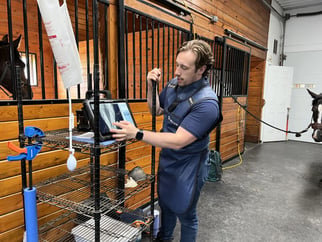
Dental Anatomy and Dentistry Cases
- Explore the structure and function of equine teeth, learning how dental health impacts overall well-being. The session may include identifying common dental issues.
Patient Case Studies (Hoof and Lameness cases)
- Review real or simulated cases involving conditions like abscesses, laminitis, navicular disease, and conformation-related issues.
- Rotate husbandry activities such as grooming, basic care and monitoring health.
Bandaging Lab
- Learn proper bandaging techniques used in equine care, including how to apply stable bandages, hoof wraps, and wound dressings. The lab will emphasize safety, cleanliness, and the importance of correct tension and placement to avoid injury or circulation issues.
Radiology and Ultrasound
- Introduce imaging techniques used in equine diagnostics. Students will learn how radiographs (X-rays) and ultrasound are used to assess bone structure, soft tissue injuries, and internal organs.
Day 6 – Pine Bush Veterinary Hospital
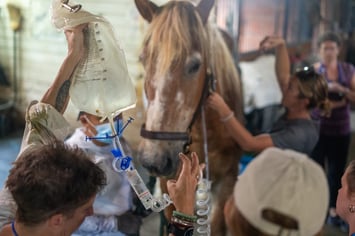
Reproduction and Neonatal Health
- Explore the fundamentals of equine reproduction, including the estrous cycle, breeding methods, and pregnancy care.
Musculoskeletal Exam
- Focus on evaluating the equine musculoskeletal system. Students will learn how to assess joints, muscles, tendons, and ligaments through palpation and movement analysis
- Tour one of the top breeding facilities in the country. There will be a good chance to see some young foals.
Suture Lab
- Learn the basics of suturing techniques used in equine medicine. Students will practice different suture patterns on simulation models or practice pads, focusing on proper needle handling, knot tying, and wound closure methods.
Preventative Medicine Discussion
- Cover the core principles of preventative care in horses. Topics may include vaccination schedules, deworming protocols, dental care, nutrition, and routine health checks.
Day 7
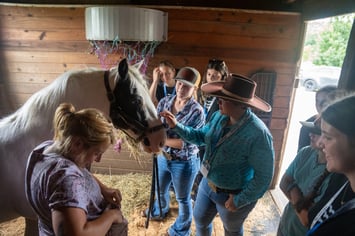
- Students who have flights will be brought to the airport while all other students will wait to be picked up
Health & Safety
Travel with confidence knowing you're never alone out there. When you choose Envision by WorldStrides, you've got an entire support network working around the clock to keep you safe.
Learn More
Safety Monitoring

Extensive Preparation

Local Support

About Loop Abroad, our partner in Veterinary Medicine
Loop Abroad is the leading pre-veterinary travel program in the nation, with thousands of alumni at university and vet school campuses across the U.S. Their programs help students experience diverse veterinary careers firsthand. With an international team of expert wildlife and zoo veterinarians, Loop Abroad helps empower students to pursue the animal science careers of their dreams.
Testimonials
Frequently Asked Questions
What work background does your staff have? Have they taught/worked with youth before?
All staff go through an extensive training that includes developmental needs of students, facilitation techniques, classroom management strategies, as well as our medical, emergency, safety, and accountability policies. Many of our support staff are college students who have a passion for working with youth.
Is there a packing list?
One will be provided online closer to the program, that said students are outside from approximately 8 a.m. to 6 p.m., in the summer, working with animals. Appropriate yet comfortable attire will be required. Closed toe shoes are a requirement.
Can I request to be roommates with someone else?
We assign roommates according to the age of each student unless we receive a specific request. Although we try to ensure that every student has a roommate, we cannot guarantee a roommate, and some students may be placed in a single room. Students can request one roommate if:
- Both students are enrolled in the same program/session
- Both students identify as the same gender
- Both students complete the online Roommate Request Form no later than 3 weeks before their session.
I have specific dietary restrictions. Where do I submit this information and who can I speak with to discuss my needs?
If you have specific dietary concerns you can submit your needs before the program starts via the student portal. We have vegetarian options available for all meals at all locations. All other dietary needs (vegan, kosher, halal, gluten free, food allergies, fasting, etc.) should be communicated to our Office of Admissions, (866) 858-5323.
I take medication, how will that be handled?
You should inform staff of any medication but then you will need to self-manage medication while on program. Families should be reminded to send more than enough medication for the duration of the program. Envision staff are not able to administer any kind of medication even over-the-counter medication, like Tylenol. You must complete a Student Medication Administration Form (included on the Portal) and submit to the program staff on arrival day. Special requests regarding medication, including requests for refrigeration, should be communicated to our Office of Admissions, (866) 858-5323..
I left an important item at home. What should I do?
Your family should contact the onsite contact phone number so coordination can occur. The group is offsite all day and back on campus in the evening. All items, unless urgent, will be delivered to you upon return to campus in the evening.
I am having trouble with my roommate or classmate. What support is available to help?
All of our staff members are equipped to help scholars with any issues or concerns that may arise during the program. If at any time you have a concern, you are encouraged to reach out to a staff member for assistance. An onsite staff member is available 24 hours.
What if I don’t feel well?
All of our staff members are equipped to help you with any issues or concerns that may arise during the program. If at any time you have a concern, please don't hesitate to reach out to a staff member for assistance. Whether you're feeling under the weather, homesick, overwhelmed, or just need someone to talk to, we're here to support you. Our caring team understands that being away from home can sometimes be challenging, and we want to make sure you feel comfortable and well-cared for throughout your experience. An onsite staff member is available 24 hours a day, and students will always have cell phone numbers for designated program staff so you can reach us whenever you need us.
I’ll be arriving late to the program; can I still attend?
Of course! If you arrive late to the program, just give the Program Office or Admissions team a call to let us know when you'll be getting there. Once you arrive, we'll help you get settled with a quick registration and then connect you with the group so you can jump right into the experience.
What education level do your staff have?
Veterinarians are professionals in the industry. Senior Management Staff have a bachelor’s degree or above. Support staff are often collegiate students in veterinary school or in education or like backgrounds, most are also alumnae of prior veterinary medicine programs of our partner, Loop Abroad.
Your Nomination Makes An Impact
For over 40 years, Envision’s programs have helped students discover their passion, test drive careers, and develop as leaders. Give students an opportunity to reach their full potential by nominating them today.