
- Feel the energy as you navigate through registration lines, begin to form connections with peers, and let your anxiety for the week fade away.
Envision by WorldStrides
Future Vet: Zoo Medicine - Massachusetts
Your middle schooler goes behind the scenes at AZA-accredited Capron Park Zoo in Attleboro, Massachusetts, working alongside zoo veterinarians and learning essential animal care and veterinary skills.
Confirm Invite
Enroll NowFuture Vet Zoo Medicine Program for Middle School Students in Massachusett
You're one step closer to an unforgettable experience. Tell us a bit about yourself and we'll get you the latest program info and connect you with our admissions team for personalized support. Ready to get started?
All fields marked with an * are required.
Close
Congrats!
You've been invited!
Please fill out the form to confirm receipt of your invitation and receive additional program information.

Where Your Child's Love for Animals Meets Professional Zoo Medicine
Does your middle schooler light up when talking about exotic animals? Imagine them learning to prepare meals for white lions, designing enrichment activities for red kangaroos based on natural behaviors, or observing a zoo veterinarian conduct health examinations on animals they've only seen from behind barriers.
At Future Vet: Zoo Medicine, your child gains hands-on experience in professional zoo veterinary medicine at the AZA-accredited Capron Park Zoo in Massachusetts. Home to approximately 100 animals representing 44 species, Capron Park Zoo is dedicated to inspiring young people to become more interested in the natural world through exhibits and educational programs.
Your student stays at nearby Stonehill College with daily transportation to the zoo, where they learn age-appropriate veterinary skills including basic suturing techniques, understanding radiographs, and performing supervised physical examinations while rotating through different animal areas to learn specialized care for exotic birds, reptiles, and mammals. Evenings at Stonehill balance structured learning with social time, allowing students to process their incredible zoo experiences and build friendships with like-minded peers.
Whether your child is exploring animal science careers, passionate about wildlife conservation, or curious about zoo management, this program provides comprehensive exposure to zoo veterinary medicine while building foundational knowledge appropriate for middle school students interested in future veterinary careers.
Grades:
6-8Duration:
7 daysFormat:
ResidentialStarting Price:
$4,999.00Locations, program content, and speakers are subject to change.
What Makes This Zoo Program Special for Young Students
Work with Diverse Zoo Animals
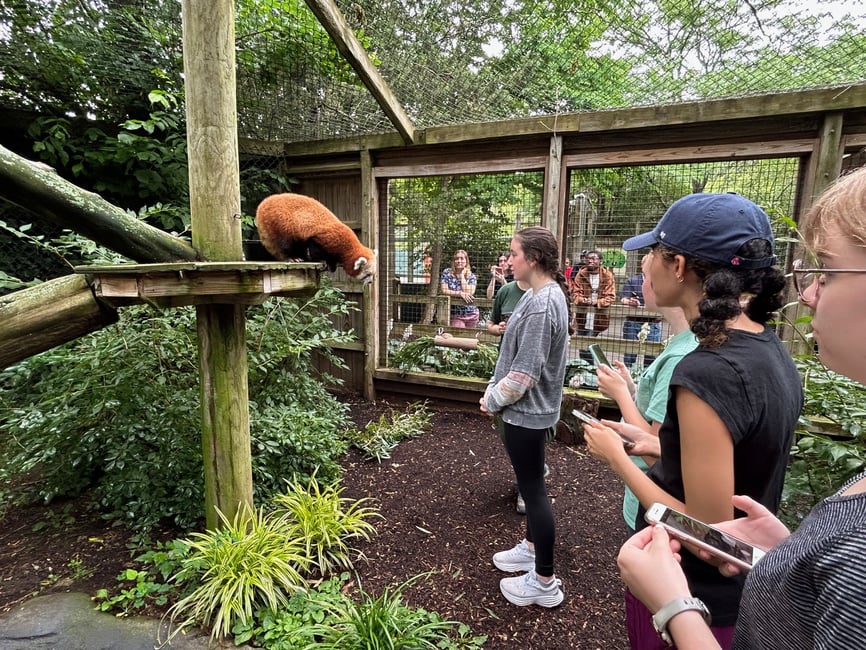
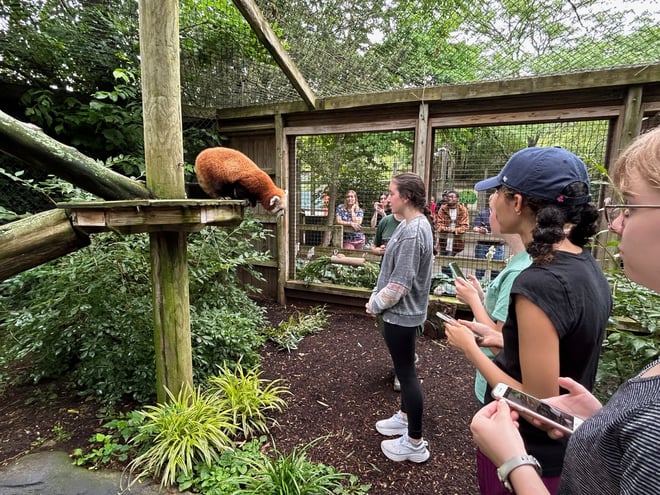
Your child interacts with ambassador animals including white lions, red kangaroos, Amur leopards, sloth bears, and over 100 animals representing 44 species of reptiles, birds, and mammals in a professional zoo environment.
Learn Real Animal Care Skills
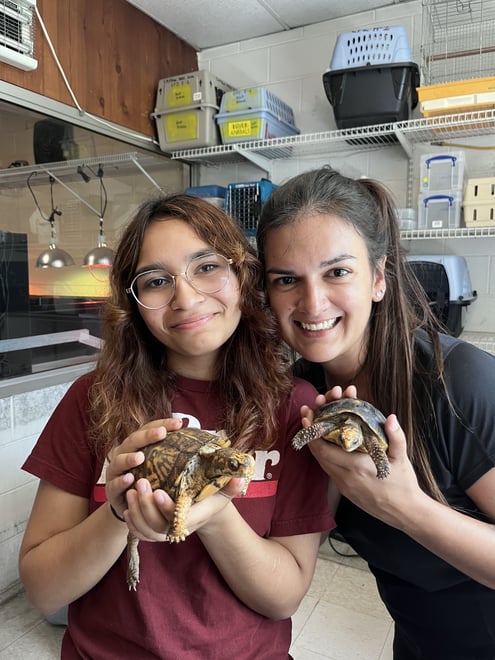
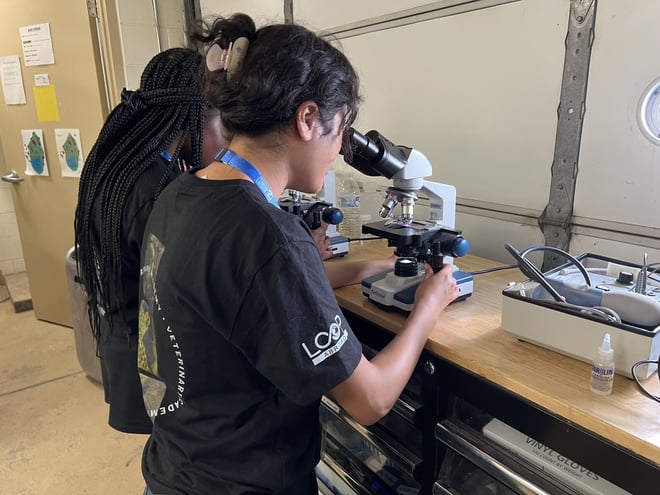
Students gain supervised hands-on experience with age-appropriate veterinary techniques including basic suturing, understanding diagnostic imaging, conducting physical examinations, and learning specialized approaches for exotic animal care.
Experience A Working Farm Visit
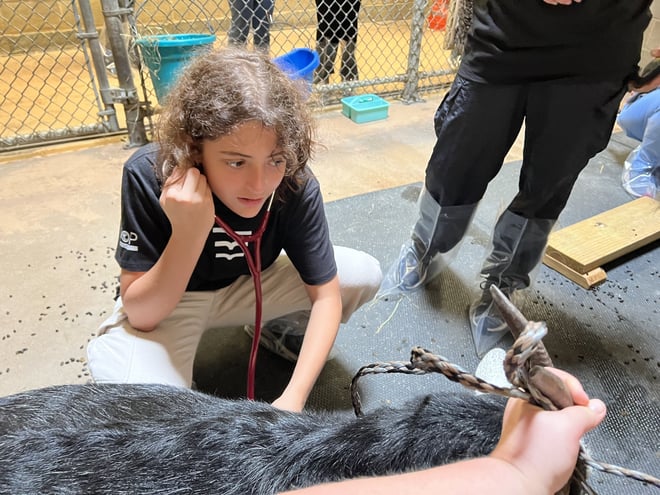
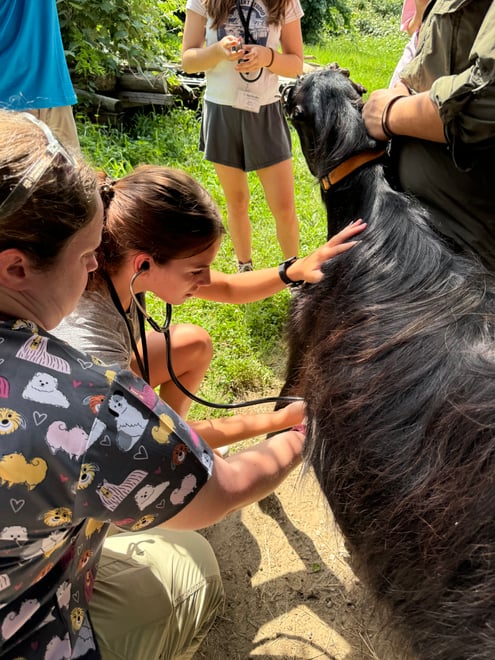
Visit a working farm to learn about large animal medicine—an in-demand veterinary specialty. Your child gains experience working with horses, pigs, and cattle while understanding the importance of farm animal healthcare.
College Campus Experience
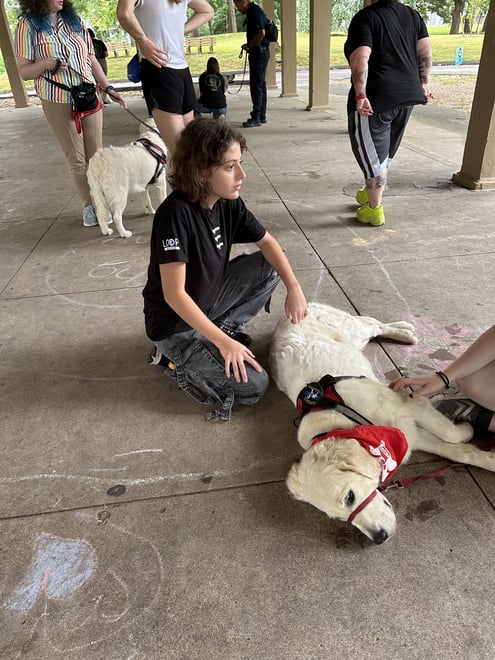
Your middle schooler stays at Stonehill College with daily transportation to Capron Park Zoo, experiencing a preview of college life while building practical animal care skills under professional supervision.
Why Parents Choose This Zoo Program for Their Middle Schooler
Early Veterinary Experience in Zoo Medicine
Your child begins accumulating veterinary experience with exotic animals early, building a foundation in zoo medicine that demonstrates long-term interest when applying to competitive veterinary programs in the future.
Exposure to Multiple Animal Categories
Students work with diverse animal groups including birds, reptiles, large animals, exotic mammals, and wildlife—gaining broad exposure that helps them understand different veterinary specialties and discover their interests.
Learn Zoo Operations and Animal Welfare
Your child learns how professional zoos operate, including enclosure design principles, animal enrichment creation, behavioral assessment techniques, and the ethical responsibilities of maintaining diverse species in captive environments.
Age-Appropriate Professional Mentorship
With a maximum of 30 students and a 10:1 student-to-veterinarian ratio, your child receives personalized attention from zoo veterinarians experienced in teaching and inspiring middle school learners in an intimate, supportive environment.

About Loop Abroad, our partner in Veterinary Medicine
Loop Abroad is the leading pre-veterinary travel program in the nation, with thousands of alumni at university and vet school campuses across the U.S. Their programs help students experience diverse veterinary careers firsthand. With an international team of expert wildlife and zoo veterinarians, Loop Abroad helps empower students to pursue the animal science careers of their dreams.
Dates, Locations, & Tuition
Featured Extras
Tuition & Travel Protection
Optional protection plan providing comprehensive coverage including trip cancellation, medical evacuation, baggage protection, and accident insurance with assistance services.
Full Refund Program
For an additional fee, WorldStrides offers protection for your investment through the Full Refund Program (FRP). Should you need to cancel your trip for any reason after the 24-hour grace period from registration, or in the event that your program is cancelled as a result of Uncontrollable Circumstances (as defined below), the FRP protects your investment by reimbursing you for 100% of the amounts you’ve paid in, minus the FRP enrollment fee, any other Non-Refundable Fees.
Empty Component, This component needs a data source to render properly. Please remove it or assign a Datasource
Sample Itinerary
* Exact itinerary will vary by session and location. Participants should reference the itinerary provided as part of their enrollment package
Day 1
- Connect with your WorldStrides team and Loop Abroad veterinarians as you kick off the week with welcome activities and orientation.
Day 2
- Discover the fascinating world of exotic wildlife mammals in your first lecture led by your veterinarian.
- Observe the unique behaviors of exotic and native species during your visit to Capron Zoo, where you'll gain insight into animal communication, social interactions, and habitat-driven routines.
Food Preparation
- Prepare balanced and species-specific meals for zoo animals, learning how nutrition supports health, behavior, and enrichment.
Enclosure Maintenance and Management
- Maintain animal enclosures by cleaning, inspecting, and organizing habitats to ensure safety, hygiene, and comfort for each species.
Animal Enrichment
- Create engaging enrichment tools and activities that stimulate natural behaviors, promote mental well-being, and enhance the daily lives of zoo animals.
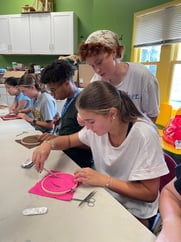
- Practice essential suturing techniques under the guidance of your veterinarian, gaining hands-on experience in wound closure and surgical skills used in clinical animal care.
Day 3
Practice Physical Exams
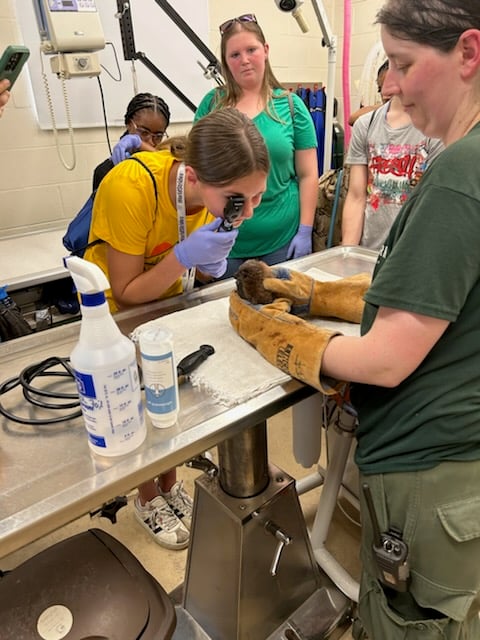
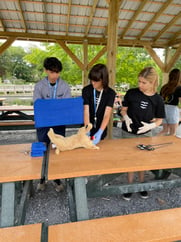
- Perform hands-on physical examinations to assess animal health, learning key techniques for evaluating vital signs, body condition, and overall wellness.
Positive Reinforcement Training
- Apply positive reinforcement methods to encourage desired behaviors, build trust and communication between animals and caregivers through reward-based training.
Food Preparation
- Prepare balanced and species-specific meals for zoo animals, learning how nutrition supports health, behavior, and enrichment.
Enclosure Maintenance and Management
- Maintain animal enclosures by cleaning, inspecting, and organizing habitats to ensure safety, hygiene, and comfort for each species.
Animal Enrichment
- Create engaging enrichment tools and activities that stimulate natural behaviors, promote mental well-being, and enhance the daily lives of zoo animals.
Food Preparation
- Prepare balanced and species-specific meals for zoo animals, learning how nutrition supports health, behavior, and enrichment.
Enclosure Maintenance and Management
- Maintain animal enclosures by cleaning, inspecting, and organizing habitats to ensure safety, hygiene, and comfort for each species.
Animal Enrichment
- Create engaging enrichment tools and activities that stimulate natural behaviors, promote mental well-being, and enhance the daily lives of zoo animals.
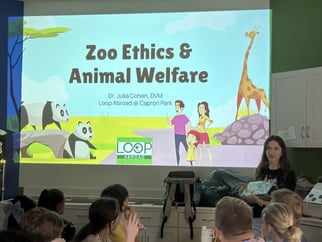
- Explore the ethical responsibilities of zoos, the principles of animal welfare, and the vital role zoos play in global conservation efforts during an engaging lecture led by your veterinarian.
- Learn essential bandaging techniques in a hands-on classroom session with your veterinarian, focusing on proper wound care, support, and stabilization methods used in clinical practice.
Day 4
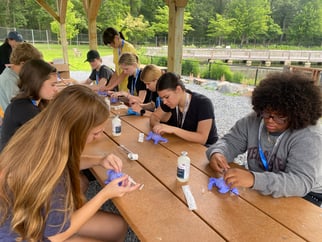
- Discover the fundamentals of reptile care in an introductory session with your veterinarian, covering handling techniques, habitat setup, nutrition, and species-specific health considerations.
- Practice veterinary diagnostics and reptile physical exams with your veterinarian, building skills in species-specific care.
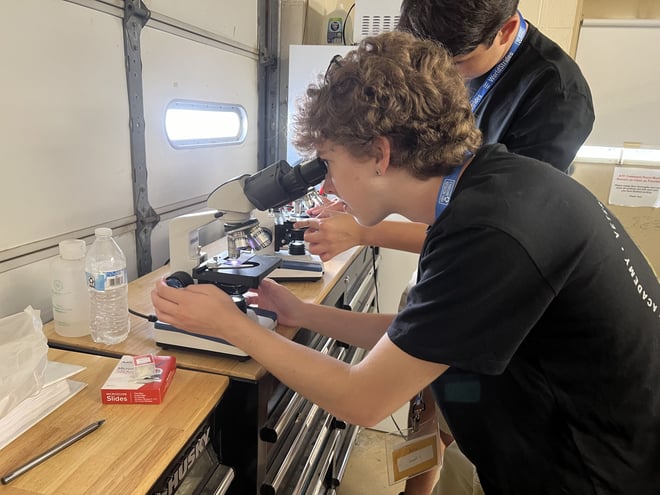
- Identify common parasites in a lab session with your vet, using microscopes to assess animal health.
Food Preparation
- Prepare balanced and species-specific meals for zoo animals, learning how nutrition supports health, behavior, and enrichment.
Enclosure Maintenance and Management
- Maintain animal enclosures by cleaning, inspecting, and organizing habitats to ensure safety, hygiene, and comfort for each species.
Animal Enrichment
- Create engaging enrichment tools and activities that stimulate natural behaviors, promote mental well-being, and enhance the daily lives of zoo animals.
- Design a creative enrichment project tailored to your assigned zoo animal, apply behavioral insights and presenting your plan to enhance welfare and stimulate natural behaviors.
Day 5
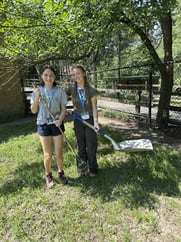
- Explore avian care basics through small group work focused on handling, nutrition, and health practices
- Analyze radiographs with your vet to identify anatomy and spot clinical abnormalities.
- Perform rabbit physical exams with your veterinarian, focusing on gentle handling, health assessment, and species-specific care techniques.
- Prepare for your keeper talk by researching your assigned animal, organizing key facts, and developing a clear, engaging presentation to share with zoo visitors.
Day 6
- Present your keeper talk to zoo visitors, sharing engaging facts and stories about your assigned animal to educate and inspire public interest in wildlife care and conservation.
- Share insights into veterinary careers as your vet discusses job paths in animal medicine, the differences between capture-and-release and rehabilitation, and their role in wildlife care and conservation.
Enclosure Design Workshop
- Collaborate in small groups to design enriching animal enclosures, applying knowledge of species needs, behavior, and welfare.
Blood Cytology Lab
- Investigate blood samples in small groups with your veterinarian, learning to identify cell types and assessing animal health.
Day 7
.jpg?h=242&iar=0&w=355)
- Students who have flights will be brought to the airport while all other students will wait to be picked up
Health & Safety
Travel with confidence knowing you're never alone out there. When you choose Envision by WorldStrides, you've got an entire support network working around the clock to keep you safe.
Learn More
Safety Monitoring

Extensive Preparation

Local Support
Testimonial
Frequently Asked Questions
What work background does your staff have? Have they taught/worked with youth before?
All staff go through extensive training that includes developmental needs of students, facilitation techniques, classroom management strategies, as well as our medical, emergency, safety, and accountability policies. Many of our support staff are college students who have a passion for working with youth.
Is there a Packing List?
One will be provided online closer to the program, that said students are outside from approximately 8 a.m. to 6 p.m., in the summer, working with animals. Appropriate yet comfortable attire will be required. Closed toe shoes are a requirement.
Can I request to be roommates with someone else?
We assign roommates according to the age of each student unless we receive a specific request. Although we try to ensure that every student has a roommate, we cannot guarantee a roommate, and some students may be placed in a single room. Students can request one roommate if:
- Both students are enrolled in the same program/session
- Both students identify as the same gender
- Both students complete the online Roommate Request Form no later than 3 weeks before their session.
I have specific dietary restrictions. Where do I submit this information and who can I speak with to discuss my needs?
If you have specific dietary concerns you can submit your needs before the program starts via the student portal. We have vegetarian options available for all meals at all locations. All other dietary needs (vegan, Kosher, Halal, gluten free, food allergies, fasting, etc.) should be treated as a special request and submitted as a case to the program team for review.
I take medication, how will that be handled?
You should inform staff of any medication but then you will need to self-manage medication while on program. Families should be reminded to send more than enough medication for the duration of the program. Envision staff are not able to administer any kind of medication even over-the-counter medication, like Tylenol. Parents must complete a Student Medication Administration Form (included on the Student Portal) and submit to the program staff on arrival day. Specific requests regarding medication, including requests for refrigeration, should be shared with our Office of Admissions.
I left an important item at home. What do I do?
Families should contact the onsite contact phone number so coordination can occur. The group is offsite all day and back on campus in the evening. All items, unless urgent, will be delivered to you upon return to campus in the evening.
I am having trouble with my roommate or classmate. What support is available to help?
All of our staff members are equipped to help scholars with any issues or concerns that may arise during the program. If at any time you have a concern, you are encouraged to reach out to a staff member for assistance. An onsite staff member is available 24 hours.
What if I do not feel well?
All of our staff members are equipped to help you with any issues or concerns that may arise during the program. If at any time you have a concern, you are encouraged to reach out to a staff member for assistance. An onsite staff member is available 24 hours. Students will always have cell phone numbers for designated program staff.
I will be arriving late to the program; can I still attend?
Yes. If you will be arriving late to the program, please call our Office of Admissions team to notify us of your delayed arrival. Once you arrive, you will complete registration, and you will be escorted to meet the group.
What education level do your staff have?
Veterinarians are professionals in the industry. Senior Management Staff have a bachelor’s degree or above. Support staff are often collegiate students in veterinary school or in education or like backgrounds, most are also alumnae of prior veterinary medicine programs of our partner, Loop Abroad.
Your Nomination Makes An Impact
For over 40 years, Envision’s programs have helped students discover their passion, test drive careers, and develop as leaders. Give students an opportunity to reach their full potential by nominating them today.