


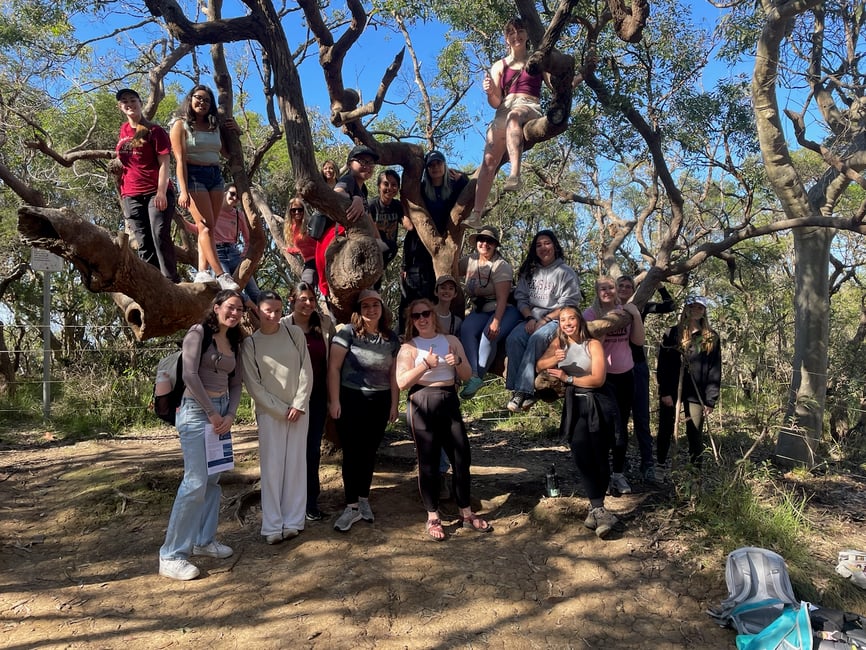
- Arrive in Sydney with your group and head straight to the Walkabout Wildlife Park, where a warm welcome awaits—from friendly staff to vibrant koalas, Tasmanian devils, kangaroos, and wallabies.
Envision by WorldStrides
Veterinary Academy: Australian Wildlife
Embark on a two-week adventure "down under" at Walkabout Wildlife Park in Calga Springs, where you'll gain hands-on experience with koalas, kangaroos, echidnas, and hundreds of other Australian species while learning zoo veterinary medicine and wildlife conservation from expert veterinarians.
Confirm Invite
Enroll NowLet's connect
You're one step closer to an unforgettable experience. Tell us a bit about yourself and we'll get you the latest program info and connect you with our admissions team for personalized support. Ready to get started?
All fields marked with an * are required.
Close
Congrats!
You've been invited!
Please fill out the form to confirm receipt of your invitation and receive additional program information.

Where Australian Wildlife Meets Your Veterinary Future
You're conducting a health check on a kangaroo under an Australian veterinarian's guidance, mastering marsupial handling techniques. You're examining python anatomy in the field lab, understanding the unique physiology of Australian reptiles. At the Veterinary Academy: Australian Wildlife, these become your daily reality in one of the world's most unique ecosystems.
This immersive two-week program at Walkabout Wildlife Park in Calga Springs, just outside Sydney, places you directly in the Australian wilderness working with species found nowhere else on Earth. You'll live and work alongside professional veterinarians caring for over 200 captive animals across 80 acres of protected bushland.
Master specialized skills like marsupial anatomy, wildlife restraint, necropsy procedures, and animal enrichment design. From assisting with flying fox care to creating enrichment for Tasmanian devils, every day brings new discoveries while contributing to real conservation efforts.
Spend evenings in eco-cabins surrounded by Australian bush sounds, sharing meals with fellow future veterinarians. Combine serious veterinary learning with cultural experiences and coastal adventures.
Whether you're drawn to wildlife conservation, zoo medicine, or exotic animal practice, this program provides irreplaceable experience with unique species while earning substantial veterinary hours for your applications.
Grades:
9-12Duration:
14 DaysCollege Credit Hours:
2 College CreditsVeterinary Hours:
80Format:
ResidentialLocations, program content, and speakers are subject to change.
Envision by WorldStrides
For over 40 years, Envision—part of the WorldStrides family—has helped students from elementary through high school explore their interests and uncover what excites them most. Our immersive programs are built with educators and industry experts to support career exploration, leadership growth, and college prep. Along the way, students build real-world skills, boost their confidence, and start to see a clearer path toward their future.
Why This Program Changes Everything
Work with Iconic Australian Wildlife
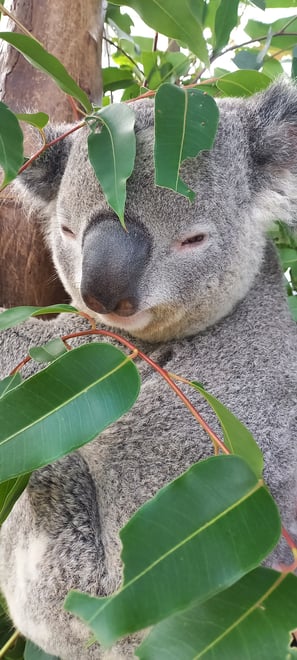
Students will work with teaching veterinarians and care teams to provide clinical rotations with koalas, kangaroos, echidnas, wallabies, Tasmanian devils, wombats, and hundreds of other species unique to Australia's ecosystem.
Professional Clinical Lab Experience
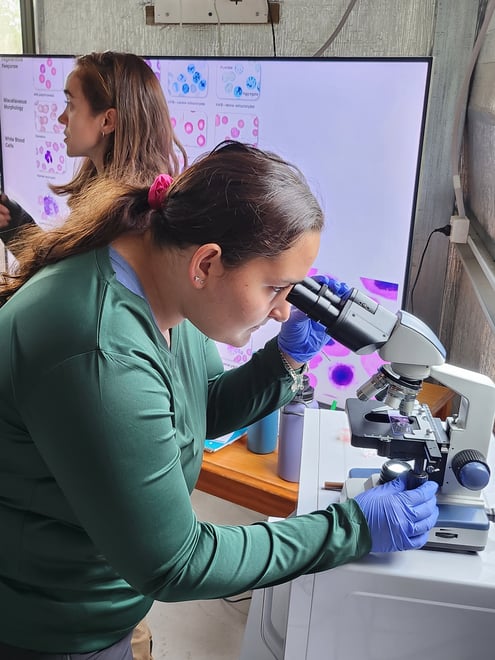
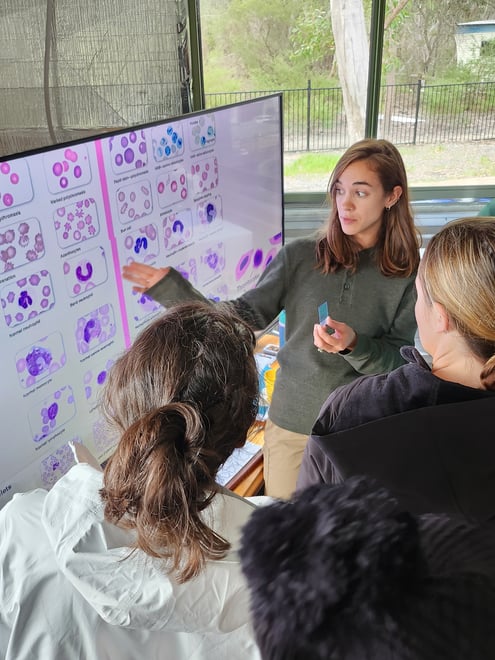
Students participate in clinical lab rotations to practice essential skills like using microscopes, suturing techniques, necropsy procedures, and wildlife research while learning anatomy and handling of marsupials under expert supervision.
Behind-the-Scenes at Taronga Zoo
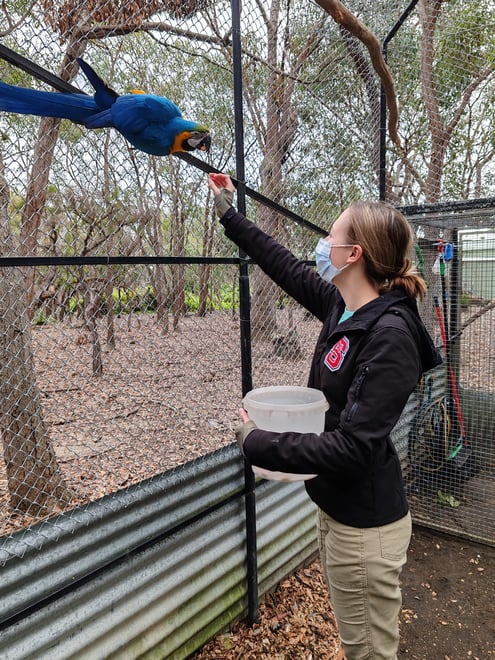
Day trip to world-renowned Taronga Zoo in Sydney Harbor includes behind-the-scenes hospital tours led by zoo veterinarians, offering insight into how one of the world's most respected zoos provides daily care for over 5,000 animals.
Authentic Australian Bush Experience
Live on-site at Walkabout Wildlife Park in eco-cabins surrounded by 170 acres of natural habitat, experiencing authentic Australian bush life while exploring Aboriginal cultural sites and coastal townships like Terrigal.
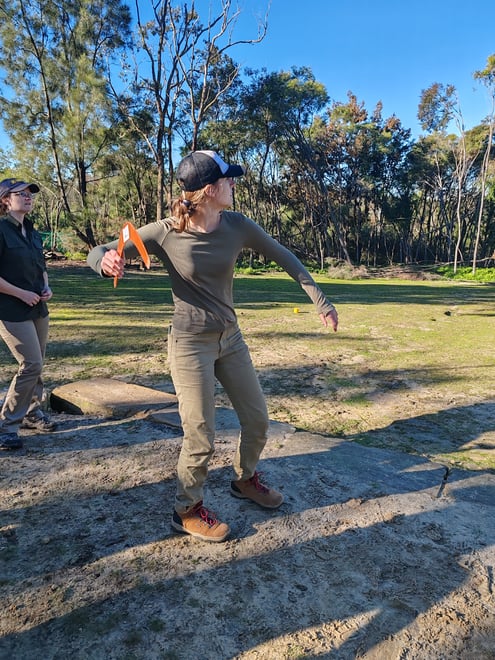
Built for Your Veterinary School Success
Earn Up to 80 Veterinary Hours
Gain substantial veterinary hours for vet school requirements. These specialized wildlife hours demonstrate dedication to exotic animal medicine and provide unique international experience that distinguishes your application.
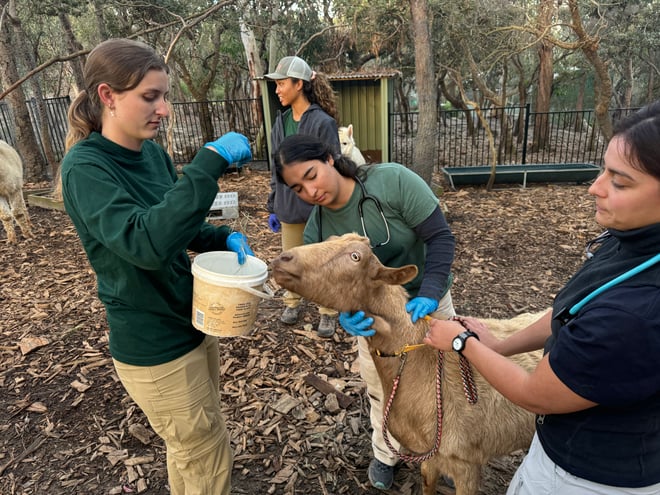
Master Specialized Wildlife Skills
Develop expertise in marsupial anatomy, wildlife handling and restraint, necropsy procedures, animal enrichment design, and zoo medicine techniques. These specialized skills are essential for careers in wildlife conservation and exotic animal veterinary practice.
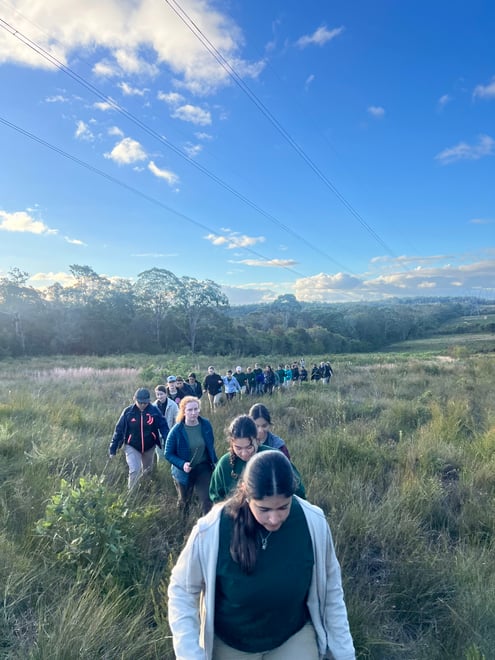
Contribute to Conservation Efforts
Support conservation through education and breeding programs for endangered species like Tasmanian devils and Eastern quolls. Gain meaningful conservation experience while building your international professional portfolio.
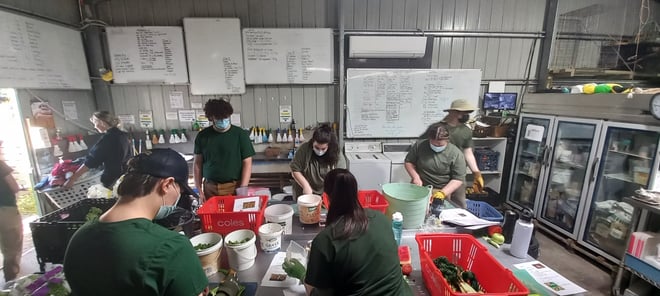
Learn From International Experts
With maximum 30 students and 10:1 student-to-veterinarian ratio, receive personalized mentorship from Australian and American veterinary professionals. This international perspective broadens your understanding of global veterinary practices.
Dates, Locations, & Tuition
Featured Extras
Tuition & Travel Protection
Optional protection plan providing comprehensive coverage including trip cancellation, medical evacuation, baggage protection, and accident insurance with assistance services.
Full Refund Program
For an additional fee, WorldStrides offers protection for your investment through the Full Refund Program (FRP). Should you need to cancel your trip for any reason after the 24-hour grace period from registration, or in the event that your program is cancelled as a result of Uncontrollable Circumstances (as defined below), the FRP protects your investment by reimbursing you for 100% of the amounts you’ve paid in, minus the FRP enrollment fee, any other Non-Refundable Fees.
Sample Itinerary
* Exact itinerary will vary by session and location. Participants should reference the itinerary provided as part of their enrollment package
Day 1
- Connect with your WorldStrides team and Loop Abroad veterinarians as you kick off the week with welcome activities and orientation.
Day 2
- Explore the fundamentals of wildlife behavior and learn how enrichment
- Tour Australia’s largest working wildlife sanctuary and learn about the park’s rules and how to behave respectfully around its free-roaming, semi-wild animals.
- Meet the experienced staff who are dedicated to caring for the animals at Walkabout.
- Participate in an ethograms project where you'll observe and record animal behaviors to create a detailed behavioral catalog, helping you understand how enrichment influences wildlife activity.
Day 3
- Learn the proper safety techniques for handling Australian reptiles and amphibians.
- Engage in hands-on projects and participate in Ranger Assist duties, gaining practical experience in wildlife care, habitat maintenance, and visitor education.
Day 4
- Learn how veterinarians assess animal health through diagnostic tools and procedures and explore post-mortem examinations (necropsies) to understand causes of illness or death and improve wildlife care practices.
- In this lab, students will observe their first necropsy to understand internal anatomy and pathology, practice basic suturing techniques, and conduct physical exams to assess animal health and behavior.
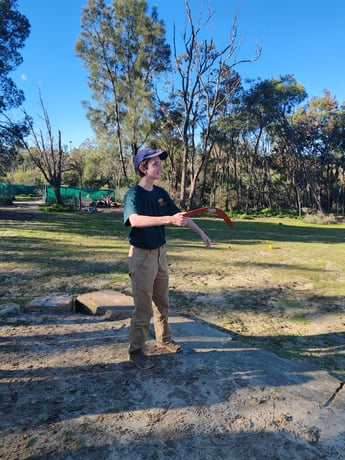
- In this lab rotation, students will participate in clinic rounds to observe and assist with animal care, explore Aboriginal cultural concepts during a ridgeline walk, and engage with traditional tools and music by learning about boomerangs and the didgeridoo.
- In this lab rotation, students will develop an enrichment plan and ethogram to analyze animal behavior, while also learning essential Aussie bush survival skills.
Day 5
- Examine the dietary adaptations, digestive systems, and ecological roles of plant-eating and insect-eating mammals.
- In this lab, students will observe their first necropsy to understand internal anatomy and pathology, practice basic suturing techniques, and conduct physical exams to assess animal health and behavior.
- In this lab rotation, students will participate in clinic rounds to observe and assist with animal care, explore Aboriginal cultural concepts during a ridgeline walk, and engage with traditional tools and music by learning about boomerangs and the didgeridoo.
- In this lab rotation, students will develop an enrichment plan and ethogram to analyze animal behavior, while also learning essential Aussie bush survival skills.
Day 6
- Explore the anatomical, behavioral, and ecological traits of meat-eating and mixed-diet mammals.
- In this lab, students will observe their first necropsy to understand internal anatomy and pathology, practice basic suturing techniques, and conduct physical exams to assess animal health and behavior.
- In this lab rotation, students will participate in clinic rounds to observe and assist with animal care, explore Aboriginal cultural concepts during a ridgeline walk, and engage with traditional tools and music by learning about boomerangs and the didgeridoo.
- In this lab rotation, students will develop an enrichment plan and ethogram to analyze animal behavior, while also learning essential Aussie bush survival skills.
Day 7
- Learn how diseases can transfer between animals and humans, explore methods for preventing outbreaks in wildlife settings, and gain insight into safe, humane techniques for capturing and restraining animals.
- Design and build enrichment projects to support animal welfare, meet with a ranger to review and approve their plans and materials, and participate in a mid-point check-in to assess progress and ensure alignment with conservation goals.
Day 8
- Learn how various natural and synthetic substances affect animal health, explore common toxins found in wildlife environments, and understand the principles of diagnosis, treatment, and prevention of poisoning in animals.
Day 9
- Embark on the Crackneck Lookout Walk to experience coastal bushland firsthand.
- Visit the Marine Discovery Centre, which offers an immersive and interactive exploration of the marine environments.
- Spend a day exploring Terrigal Beach, known for its golden sands, coastal walks, and vibrant town. Free time for students to explore.
Day 10
- Learn to interpret environments, interactions, and enrichment through the eyes of the animal, fostering empathy and deeper understanding of how human actions and habitat design impact wildlife behavior and well-being.
- In this lab rotation, students will deepen their clinical skills through advanced diagnostics including fecal analysis, suturing practice, and skin scrapings, observe a second necropsy to enhance anatomical understanding, and perform distance exams to assess animal health and behavior without direct contact.
Day 11
- Explore how anesthesia practices intersect human, animal, and environmental health, learn from their veterinarian safe and ethical techniques for sedating wildlife.
- Participate in supervised animal encounters to observe behavior and handling techniques and learn the principles and safety protocols of blow dart use as a non-invasive method for wildlife sedation and capture.
- Present certificates and projects
Day 12
Travel to Sydney
- Travel to Sydney, Australia for a day full of activities.
Taronga Zoo Visit
- Spend a day exploring the zoo grounds of the Taronga Zoo.
Sydney Evening Exploration
- Explore beautiful Sydney where iconic landmarks, vibrant waterfronts, and breathtaking views await at every turn.
** Lunch and Dinner on own
Day 13
- Enjoy a free day exploring Sydney—visit famous landmarks, go shopping, and soak up local culture.
** Meals on own
Day 14
- On Saturday, you’ll head back to the airport as a group and get ready to say goodbye and to the land down under.
Health & Safety
Travel with confidence knowing you're never alone out there. When you choose Envision by WorldStrides, you've got an entire support network working around the clock to keep you safe.
Learn More
Safety Monitoring

Extensive Preparation

Local Support

Earn College Credit
Students attending select programs are eligible to receive college credit(s) through George Mason University. Credits are included in the cost of tuition and awarded upon successful completion of the program.

About Loop Abroad, our partner in Veterinary Medicine
Loop Abroad is the leading pre-veterinary travel program in the nation, with thousands of alumni at university and vet school campuses across the U.S. Their programs help students experience diverse veterinary careers firsthand. With an international team of expert wildlife and zoo veterinarians, Loop Abroad helps empower students to pursue the animal science careers of their dreams.
Testimonials
Frequently Asked Questions
What work background does your staff have? Have they taught/worked with youth before?
All staff go through extensive training that includes developmental needs of students, facilitation techniques, classroom management strategies, as well as our medical, emergency, safety, and accountability policies. Many of our support staff are college students who have a passion for working with youth.
Is there a packing list?
One will be provided online closer to the program, that said students are outside from approximately 8 a.m. to 6 p.m., in the Australian winter, working with animals. Appropriate yet comfortable attire will be required. Closed toe shoes are a requirement.
Can I request to be roommates with someone else?
We assign roommates according to the age of each student unless we receive a specific request. Although we try to ensure that every student has a roommate, we cannot guarantee a roommate, and some students may be placed in a single room. Students can request one roommate if:
- Both students are enrolled in the same program/session
- Both students identify as the same gender
- Both students complete the online Roommate Request Form no later than 3 weeks before their session.
I have specific dietary restrictions. Where do I submit this information and who can I speak with to discuss my needs?
If you have specific dietary concerns you can submit your needs before the program starts via the student portal. We have vegetarian options available for all meals at all locations. All other dietary needs (vegan, Kosher, Halal, gluten free, food allergies, fasting, etc.) should be communicated to our Office of Admissions, (866) 858-5323.
I take medication, how will that be handled?
You should inform staff of any medication but then you will need to self-manage medication while on program. Families should be reminded to send more than enough medication for the duration of the program. Envision staff are not able to administer any kind of medication even over-the-counter medication, like Tylenol. Parents must complete a Student Medication Administration Form (included on the Student Portal) and submit to the program staff on arrival day. Special requests regarding medication, including requests for refrigeration, should be communicated to our Office of Admissions, (866) 858-5323.
I left an important item at home. What do I do?
Parents should contact the onsite contact phone number so coordination can occur. The group is offsite all day and back on campus in the evening. All items, unless urgent, will be delivered to you upon return to campus in the evening.
I am having trouble with my roommate or classmate. What support is available to help?
All of our staff members are equipped to help scholars with any issues or concerns that may arise during the program. If at any time you have a concern, you are encouraged to reach out to a staff member for assistance. An onsite staff member is available 24 hours.
What if I do not feel well?
All of our staff members are equipped to help you with any issues or concerns that may arise during the program. If at any time you have a concern, you are encouraged to reach out to a staff member for assistance. An onsite staff member is available 24 hours. Students will always have cell phone numbers for designated program staff.
I will be arriving late to the program; can I still attend?
Yes. If you will be arriving late to the program, please call the Program Office or Admissions team to notify us of your delayed arrival. Once you arrive, you will complete registration, and you will be escorted to meet the group. If your anticipated arrival is over two days after the program starts, please contact the Admissions team to discuss the available options.
What accommodations are provided for the Veterinary Academy in Australia?
Accommodations for the Australia program varies for each component of the experience. Experience living at our eco-cabin with all the comforts of home nestled in the bush alive with friendly wildlife at the Walkabout Wildlife Park, where students will share cozy bunk rooms with 2-6 fellow adventurers arranged by gender. Embrace the outdoors with shared restrooms, possibly nestled amidst nature, while waking up to the sound of the kookaburras laughing in the trees outside, and do not be surprised if there is a kangaroo on your patio and an emu at the window. Please note that the Walkabout Wildlife Park is volunteer housing that provides rustic living in a unique environment.
What meals are provided and/expected for the program?
The program provides all meals for participants on-site, however, students are on their own for meals during their excursion to Sydney.
Will the bathroom be shared or ensuite during the program?
During the program, students will have shared restrooms in cabins.
Is there a swimming pool onsite?
At the Walkabout Wildlife Park, there is NO swimming pool. Remember -- it's winter in Australia during American summer.
Will there be WIFI?
There is WIFI in your cabin.
Will there be cell service where we will be staying?
There will be cell service with good signal in the city for students with International mobile plans. However, there will be poor cell service outside the city and at the Walkabout Wildlife Park. This is typical of the area.
Are there specific reminders that we should know about this program site?
It is advised that students bring a flashlight; there are NO lights along paths.
What education level do your staff have?
Veterinarians are professionals in the industry. Senior Management Staff have a bachelor’s degree or above. Support staff are often collegiate students in veterinary school or in education or like backgrounds, most are also alumnae of prior veterinary medicine programs of our partner, Loop Abroad.

Your Nomination Makes An Impact
For over 40 years, Envision’s programs have helped students discover their passion, test drive careers, and develop as leaders. Give students an opportunity to reach their full potential by nominating them today.