
Infusing Creativity into Your Classroom – Part 1
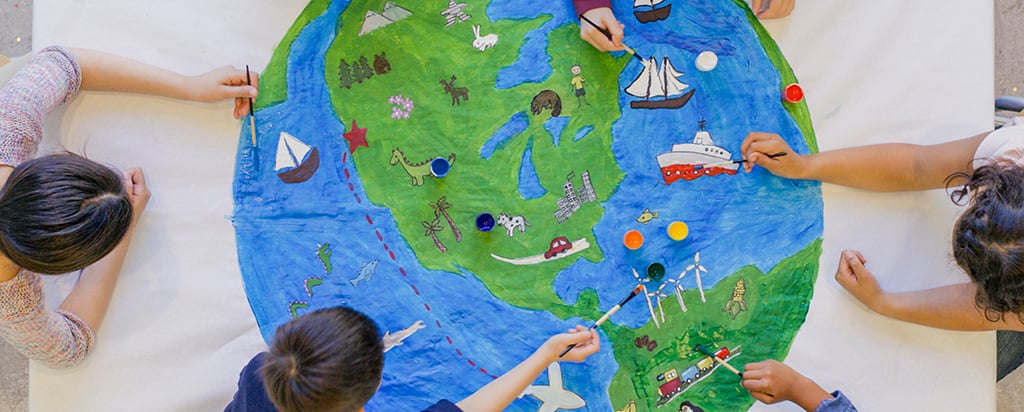
We desperately want to inspire creativity in our students. We understand how important it is. But these days our world is dominated by Common Core and standardized state testing – which don’t leave us time for much else.
Creativity may occasionally have to take a back seat, but we must ensure that it’s still a central component of our educational journey. While we can’t ignore our responsibility to turn out good test scores, we also can’t forget our underlying mission as educators: to inspire our students’ curiosity, inventiveness, and love of discovery. After all, without creativity, mankind does not advance.
Creation is, in fact, a natural human instinct, and children in particular love to build, to draw, to use their imagination. If we can find the time to nurture those creative instincts, we can contribute toward a brighter future for our planet, as well as a more engaged and inspired student body.
In this two-part blog we’ll give you concrete ideas for incorporating creativity in your teaching approach. Below you’ll find Part 1: 7 Ways to Create a Creative Learning Environment. Tune in again next week for Part 2: 20 Ideas for Creative Classroom Activities. Part 2 also provides additional resources for teaching tips, activity ideas, and creative tech tools.
7 Ways to Create a Creative Learning Environment
Your first goal is to establish a creative environment in which students think outside the box, express their ideas, discover their own solutions, and try new things. In a creative environment, students are more likely to stay engaged in the learning process, as they develop their knack for innovation.
#1 – Variety and Flexibility
If both your physical classroom and your actual lesson plans are designed for variety and flexibility, your students can easily glide into the creative frame of mind. Since different students learn and respond in different ways, variety will also give you a better chance to connect with everyone. Here are some tips:
- Keep your classroom layout flexible and adaptable to a variety of activities. When possible, enable movement, collaboration, and reconfiguration. For specifics, see our blog on 21st Century Classroom Design.
- Let students determine their own approach and format for assignments. Provide the objectives of the lesson, but let them devise a plan to accomplish those objectives and present their work.
- Vary your types of assignments. If the first one is written, make the second one verbal. Incorporate as many types of learning activities as possible.
#2 – Open-Ended Projects and Problem Solving
Repetition of memorized facts has value, but your real goal is to teach students how to solve problems. A solution-oriented approach also helps prepare students for college, where they will be expected to think for themselves. Give students as much latitude as possible with shaping the assignment, determining what resources they need, and putting their own touch on the final results. You’re likely to be surprised at your students’ ingenuity, and the wide variety in their methods. After the assignments are turned in, share two examples of how the assigned problem was solved in completely different ways.
#3 – Hands-On Learning
When students are doing rather than simply listening, they are automatically in creation mode. Present lessons that enable students to build, experiment, and get their hands dirty. Hands-on learning has been proven to increase both engagement and retention. It also helps students connect the lessons they’re learning with concrete results in the real world.
#4 – Creative Team Building
Humans are social beings, and our society has advanced only by people coming together and sharing both the workload and their unique strengths and abilities. Teaching your students to work effectively in a group will help prepare them for success in college and career environments, while also helping them become a productive member of society.
Collaboration promotes sharing of ideas, which naturally inspires creative input, while building communication skills. For more specific tips, check out: Teaching the Art of Collaboration.
#5 – Encourage Discussion
Discussion is a key part of collaboration. Guide your students toward meaningful classroom discussions that enable them to share opinions and ideas, and view issues from different sides. Benefits of classroom discussion include:
- Helping students think more critically about the material
- Enabling students to challenge each other intelligently and build off of each other’s ideas
- Activating multiple areas of the brain
- Showing students that their opinions matter
- Allowing students to develop their own voice
#6 – Integrate Stimuli: Color, Visual Aids, and Music
It’s hard to sit down and simply “be creative.” We need inspiration. A classroom that offers a variety of stimuli for the brain creates a ripe environment for creativity. The idea is to keep synapses firing in all portions of the brain, stimulating all the senses. Incorporate visual and audio aids, and let your students respond in a variety of ways with a diverse set of media. Let them write a song, or create a poster or make a movie. Keep your classroom colorful and lively, and throw in a bit of humor whenever you can. At the very least, you’ll keep them awake!
For more on Using Music as a Teaching and Learning Tool, see this article from TeachHub.
#7 – Unconventional Learning Materials
While the text book is currently an indispensable education tool, today we also have access to a much wider range of materials – including digital resources. Incorporating technology and different types of media will help your students engage with the lesson, stay attentive, and tap into their own creativity.
Come back next week to see Part 2 of our series on Classroom Creativity: 20 Ideas for Creative Classroom Activities