
Book Review: Mindset: The New Psychology of Success – by Carol Dweck
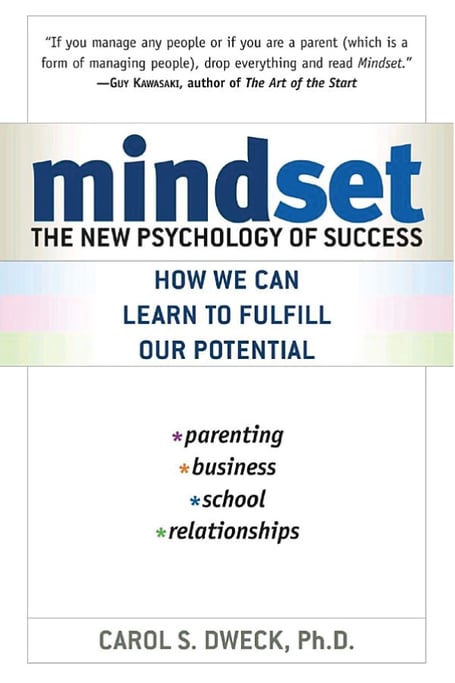
Author: Carol Dweck
Length: 288 pages
Intent/Focus: A study of how mindset profoundly affects motivation and learning
What You Will Learn: How a student’s (or anyone’s) mindset influences their ability to learn, their approach to projects, and their ability to handle failure
Why We Recommend It: Carol Dweck’s research provides invaluable lessons for educators, helping us adapt a psychologically effective way of motivating students to put forththeir best effort.
Special Offer: Congratulations to LJ Snow, who won a free copy of this book by entering our special promotion. This offer expired October 30, but we post new opportunities to win every month. Join the fun - it's easy!
Summary:
Dr. Carol Dweck, one of the world's leading developmental psychologists, summarizes twenty years of research with this simple philosophy: “Becoming isbetter than being.” In her book Mindset, she discusses how, after extensive study, she has identified two primary categories of human mindset:fixed and growth.
A fixed mindset stems from the belief that your qualities and intelligence are set at birth and are unchanging. For the fixed mindset,intelligence = success. If you succeed, you’re smart. You seek to validate your “smart” designation by choosing the easier route, to assure yourselfcontinued success. Attempting a difficult task and failing would indicate that you’re not smart after all. Criticism is seen as an attack. Effort isdiscounted.
A growth mindset develops from the belief that your intelligence and other qualities can change and improve. You feel that applyingyourself and taking on new challenges will increase your aptitude, talents and range of interests. Having a growth mindset encourages learning, practiceand effort, because you truly believe in your brain’s ability to grow. People with the growth mindset stick with something, even when it’s not going well.Criticism is embraced.
Applying Dweck’s Concepts in the Classroom
This book teaches educators two critical lessons:
1. Nurture the growth mindset by teaching students that their brain – and thus their abilities – will continue to grow, as long as they use it. ( Related article:The Science of Learning, Part 2: How the Brain Learns)
2. Praise effort, not intelligence.
When discussing Mindset, Aisha DaCosta, a writer for Actionable, says that the achievement-limiting fixedmindset starts with “the labeling of who is smart and who is not.” She remembers watching an Oprah segment in which Oprah met a star pupil, andsaid to the student’s teacher, in front of class, “I hear this is the smartest girl in the class.” That comment most likely led many of the other childrenpresent to conclude that they weren’t smart. Intelligence labels often manifest into beliefs about how much success one can “realistically”attain.
Mindsetquotes venerated coach and leader, John Wooden: “Did I win? Did I lose? Those are the wrong questions. Thecorrect question is: Did I make my best effort?” If so, “You may be outscored, but you will never lose.”
As educators, we know that praise and positivity go a long way. Dr. Dweck insists there are wrong and right ways to praise: “Praising children’sintelligence harms their motivation, and it harms their performance… Yes, children love praise. And they especially love to be praised for theirintelligence and talent. It really does give them a boost, a special glow – but only for the moment. The minute they hit a snag, their confidence goes outthe window and their motivation hits rock bottom.”
“So what should we say when children complete a task – say, math problems – quickly and perfectly? Should we deny them the praise they have earned? Yes. When this happens, I say, 'Whoops. I guess that was too easy. I apologize for wasting your time. Let’s do something you can really learnfrom!'”
Related Article:The Science of Learning, Part 3: How Emotion and Mindset Affect Learning